Capobianco Family
Japan
31 December 2026 to 16 January 2027
Japan travel basics
A few things that make Japan easier the first time.
IC cards
Trains and subways run on IC cards (Suica, Pasmo, or ICOCA in the Kansai region) — tap-to-ride cards loaded with credit that work on virtually every train, subway and bus in the country, and at most convenience stores and vending machines too. They are sold and topped up at station machines, or can be added to a smartphone.
Punctual trains
Japanese trains leave at the exact minute printed on the timetable, so it is worth arriving a few minutes early.
Walking
Much of this itinerary involves real walking — through gardens, up hillsides, along shopping streets — so comfortable, broken-in shoes matter more than you might expect.
Winter
Late December through mid-January is genuinely winter in both Tokyo and Kyoto: dry and cold, with daytime highs typically around 8–12°C and colder mornings and evenings, occasionally dipping toward light snow, especially in Kyoto. Coastal spots like Kamakura's Yuigahama Beach can feel windier still. Layers, a proper coat and a scarf are worth packing.
Tipping
Tipping is not customary in Japan and can cause confusion if attempted. Good service is simply the standard.
Convenience stores
Konbini — 7-Eleven, Lawson, FamilyMart — are everywhere, open 24 hours every day of the year including New Year's Day, and sell surprisingly good hot food, snacks and drinks. A reliable fallback any time a restaurant is closed.
Depachika
The basement food floors of department stores, usually excellent for prepared meals, sweets and gifts, though most close for at least 1 January.
Transfers and pickups
A Hiace is the Toyota van used across Japan for private airport and hotel transfers — spacious, comfortable, and easily fitting five with luggage. Almost every pickup happens at the hotel lobby at a set time, so there is never a need to find a meeting point elsewhere.
Tokyo
The Gate Hotel Tokyo by Hulic, Ginza31 December to 6 January
Arrival: airport to hotel
- Meeting point
- Airport arrivals hall, Narita
- Transfer
- Private Toyota Hiace, roughly 75–90 minutes to The Gate Hotel, Ginza, depending on traffic.
New Year's Day
- Directions
- Tokyo Metro Chiyoda Line from Hibiya Station (linked underground to Ginza) direct to Meiji-jingumae, roughly 15–20 minutes, or a taxi of similar length.
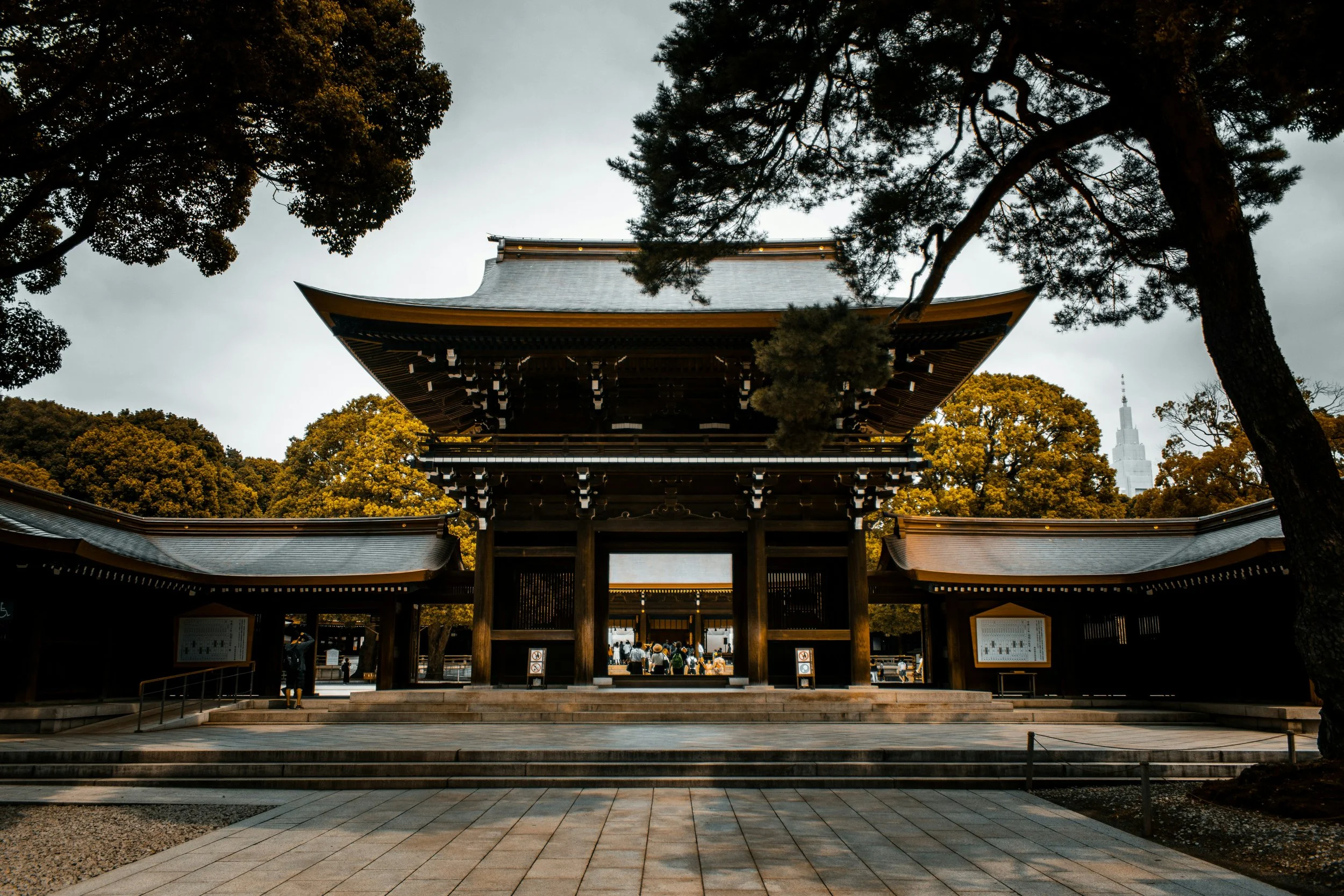
1 January is Hatsumode — the first shrine visit of the New Year, and one of the most distinctly Japanese experiences a visitor can have. Meiji Jingu, a serene forested shrine dedicated to Emperor Meiji and Empress Shoken, is the classic choice and one of Tokyo's most important Shinto sites. On New Year's Day it draws some of the largest crowds in the country, so budget for a genuinely long wait — possibly an hour or more to reach the main hall — and dress warmly for the queue. The reward is a rare, festive atmosphere: families in kimono, amazake and grilled mochi from the stalls near the entrance, and the ritual itself — a bow, a coin, two more bows, two claps, a wish, a final bow.
Afterwards, Yoyogi Park next door is a good place to stretch the legs, and Omotesando — Tokyo's tree-lined answer to the Champs-Élysées — makes for a pleasant wander past architecturally striking flagship stores, even though most will be shuttered for the holiday.
That is the one thing to plan around: 1 January is the one day of the year when most shops, restaurants and even some train timetables scale back. Treat the afternoon and evening as intentionally quiet — a relaxed few hours at the hotel, or a slow walk with no fixed agenda.
For dinner, many independent restaurants are closed, so the hotel restaurant or a nearby convenience store are the most dependable options.
teamLab and Shibuya
- Transfer
- Tokyo Metro Ginza Line runs directly between Ginza and Shibuya, about 15–20 minutes with no changes.
- Tickets
- teamLab tickets tentatively held for 10:00.
The morning is teamLab, the city's immersive digital art experience — rooms of floor-to-ceiling projected light, water, flowers and sound that respond to visitors moving through them. Genuinely striking for both kids and adults, and unlike anything most first-time visitors will have seen.
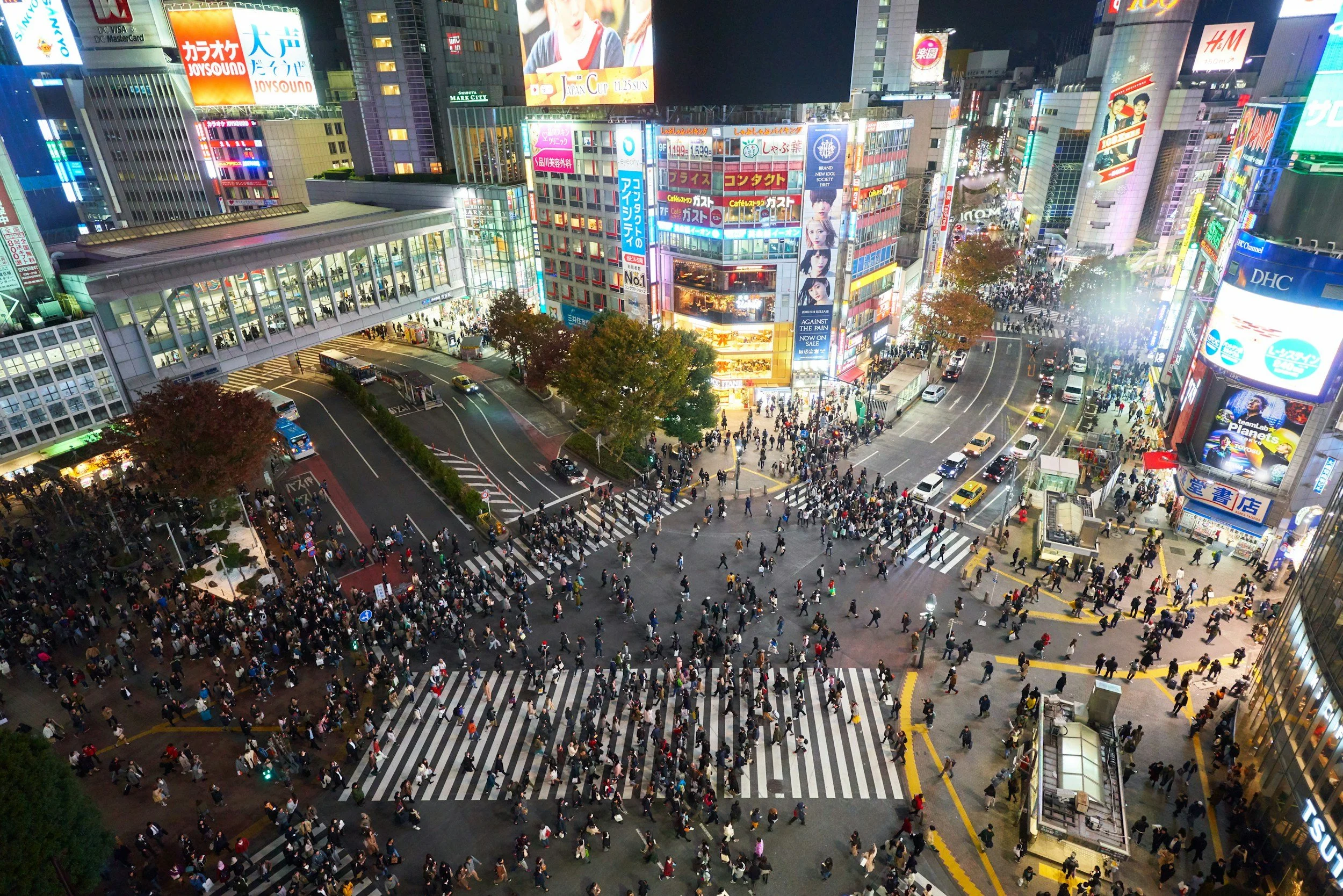
In the afternoon, Shibuya delivers the flip side of Tokyo — dense, neon and endlessly energetic. Shibuya Crossing, the famous scramble where several hundred pedestrians cross from every direction at once, is best appreciated first from street level. The Hachiko statue nearby (Japan's famously loyal dog, who waited at the station for his owner for years) is a popular meeting spot and photo stop, and the surrounding streets — Center Gai, Shibuya 109 — are worth a wander for shopping and people-watching.
It is still the New Year holiday period, so a note for dinner near the hotel tonight. Ginza Mitsukoshi, the department store a few minutes from the hotel, reopens on 2 January at 10:00 (its depachika opens slightly earlier, at 9:30), so by this evening its food hall is a good option for high-quality bento, sushi and other prepared dishes to take back to the hotel.
Otherwise, the hotel's own restaurant and the many 24-hour convenience stores within a few minutes' walk are reliable fallbacks. Holiday hours can shift year to year.
Asakusa and Kiyosumi-Shirakawa
- Meeting point
- The Gate Hotel Tokyo by Hulic lobby, 09:00.
- Transfer
- Public transport, arranged and led by the guide — roughly 20–25 minutes by subway from Ginza to Asakusa (the Ginza Line runs directly between the two).
- Service
- Half-day guided tour, English-speaking guide, public transport and entrance fees included.
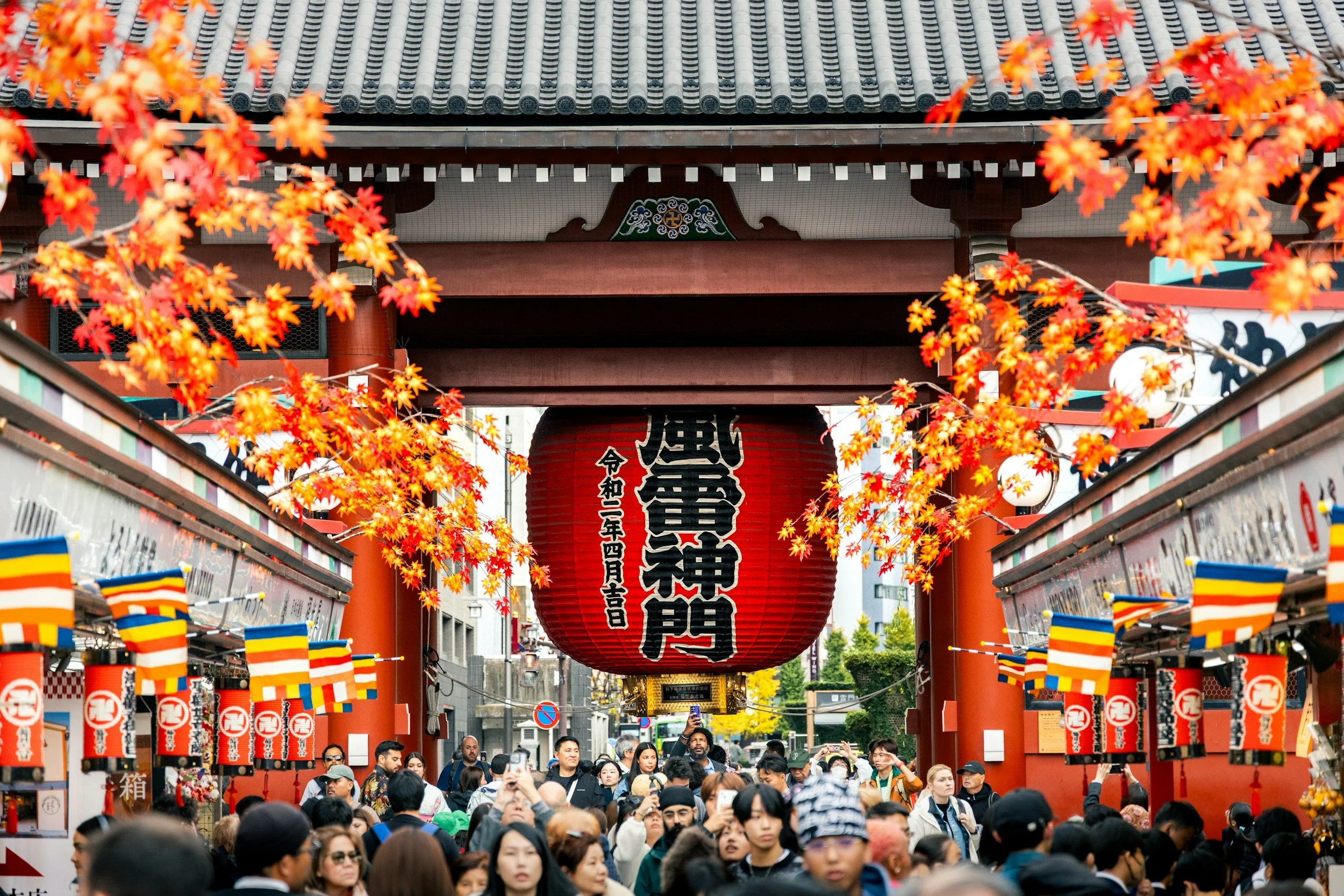
The guide meets the family in the hotel lobby and leads them by subway to Asakusa, Tokyo's historic old town and home to Senso-ji, the city's oldest Buddhist temple. The tour includes Kaminarimon — the "Thunder Gate" — the massive vermilion gate with its enormous red lantern, one of the most photographed spots in Tokyo, marking the entrance to Nakamise-dori, a traditional shopping street leading up to the temple, lined with stalls selling snacks and souvenirs.
From there, the group heads to Kiyosumi-Shirakawa, a quieter, more local neighbourhood across the river known for two very different things: Kiyosumi Garden, a classic Japanese strolling garden built around a large pond with stepping-stone paths and carefully placed rocks, and — in the surrounding streets — one of Tokyo's best concentrations of specialty coffee roasters and small artisan studios. A welcome contrast to Asakusa's busier energy.
The tour wraps up around 13:00 near the Imperial Palace (Otemon Gate), where the guide gives a brief orientation. The family can continue independently into the East Gardens (free to enter), or ask the guide to accompany them back to the hotel.
Kamakura day trip
- Meeting point
- The Gate Hotel Tokyo by Hulic lobby, 09:00.
- Transfer
- Train, taxi and walking throughout the day, all arranged by the guide. Tokyo Station is an easy 10–15 minute walk (or one stop) from the hotel.
- Service
- Full-day guided tour, English-speaking guide, public transport, entrance fees and some taxi fares included. Runs roughly 09:00 to 17:30.
Kamakura was Japan's political capital 800 years ago, under the first shogunate. Today it is a relaxed seaside town packed with temples, shrines and hiking trails — a full contrast to central Tokyo, and an easy day trip by train. The day starts with the JR Yokosuka Line from Tokyo Station at 09:12, arriving Kita-Kamakura around 10:06. From the station it is a 12-minute walk to Jochiji Temple, a quiet Zen temple approached up moss-lined stone steps, with a small cave shrine tucked into the hillside — a peaceful, uncrowded start (about 30 minutes).
A short taxi ride (around 12 minutes) leads to Zeniarai Benten (formally Ugafuku Shrine), Kamakura's "money-washing" shrine, reached through a small tunnel carved into the rock. Inside, visitors rinse coins in spring water flowing through a cave, a ritual believed to multiply the money washed there — a fun, hands-on stop for all ages (about 25 minutes). Another short taxi hop (around 10 minutes) reaches Sasuke Inari Shrine, a quiet hillside shrine approached through a tunnel of small red torii gates — far less crowded than Kyoto's famous version, with the same striking effect (about 25 minutes).
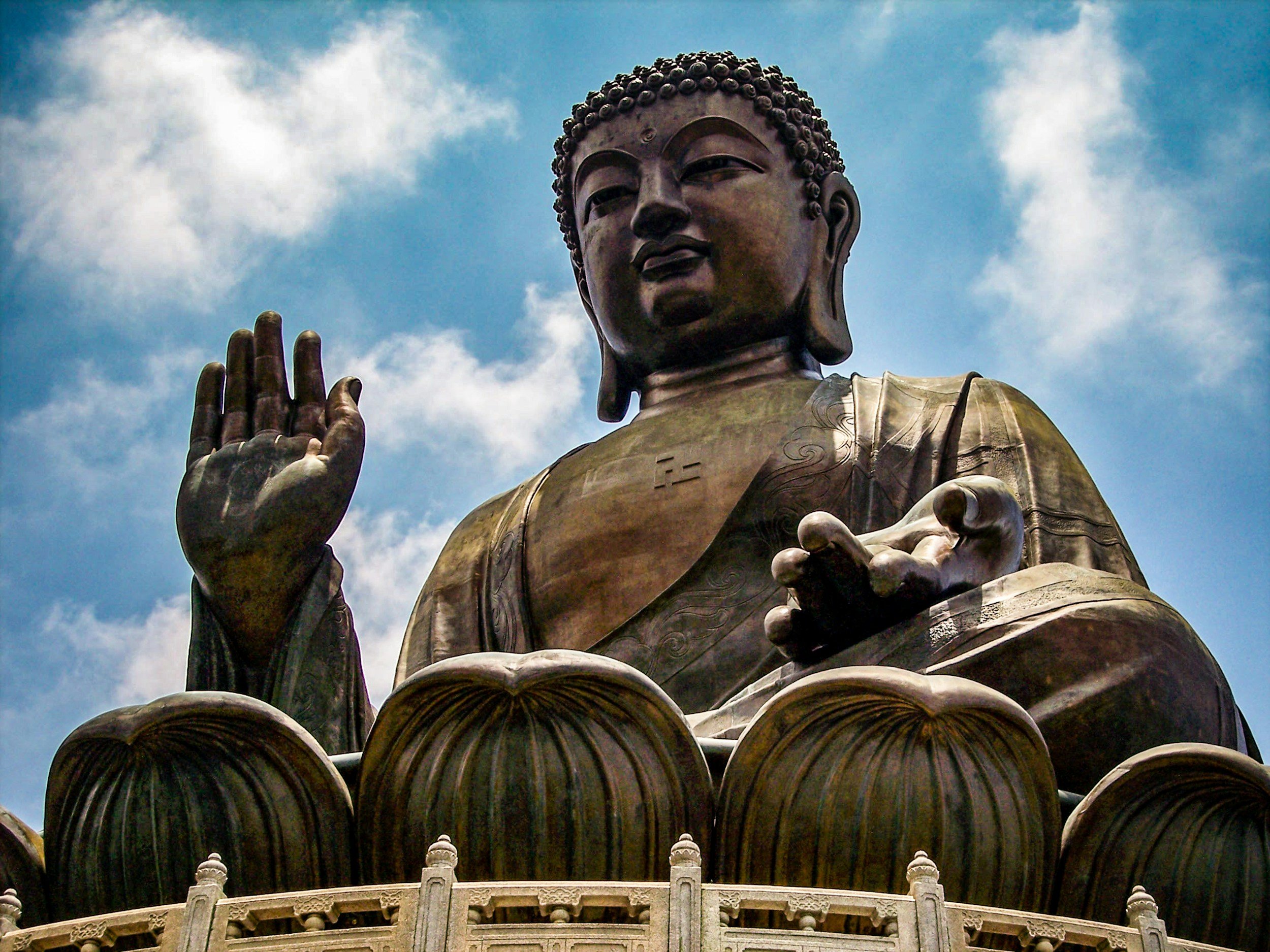
The next stop, about 12 minutes by taxi, is the main event: the Kamakura Daibutsu at Kotoku-in, the Great Buddha — a 13-metre bronze statue cast in 1252 and one of Japan's most recognisable landmarks, sitting in the open air since the hall that once housed it was destroyed by a tsunami centuries ago (about 30 minutes).
Lunch follows near Hase at leisure — this meal is not included and is paid directly, but the guide will point the family toward good nearby options.
After lunch, it is a five-minute walk to Hasedera Temple, a hillside temple with sweeping views over Sagami Bay and a gilded eleven-headed Kannon, one of the largest wooden Buddhist statues in Japan (about 30 minutes).
From there it is a flat, easy 15-minute walk down to Yuigahama Beach for free time by the water (about 30 minutes) — a low-key way to unwind, though it can be breezy this time of year. The group then rides the small, old-fashioned Enoden train to Kamakura Station, with 30 minutes to browse Komachi-dori, the town's main shopping street, before the JR Yokosuka Line back to Tokyo (departing around 15:30, arriving Tokyo Station around 16:30). The tour is scheduled until 17:30 to allow a buffer for delays.
Evening food tour of Tokyo
- Meeting point
- The Gate Hotel Tokyo by Hulic lobby, 17:30.
- Transfer
- Public transport, led by the guide, to the first restaurant, then on foot between stops.
- Service
- Evening guided food tour, English-speaking guide. Runs roughly 17:30 to 21:00.
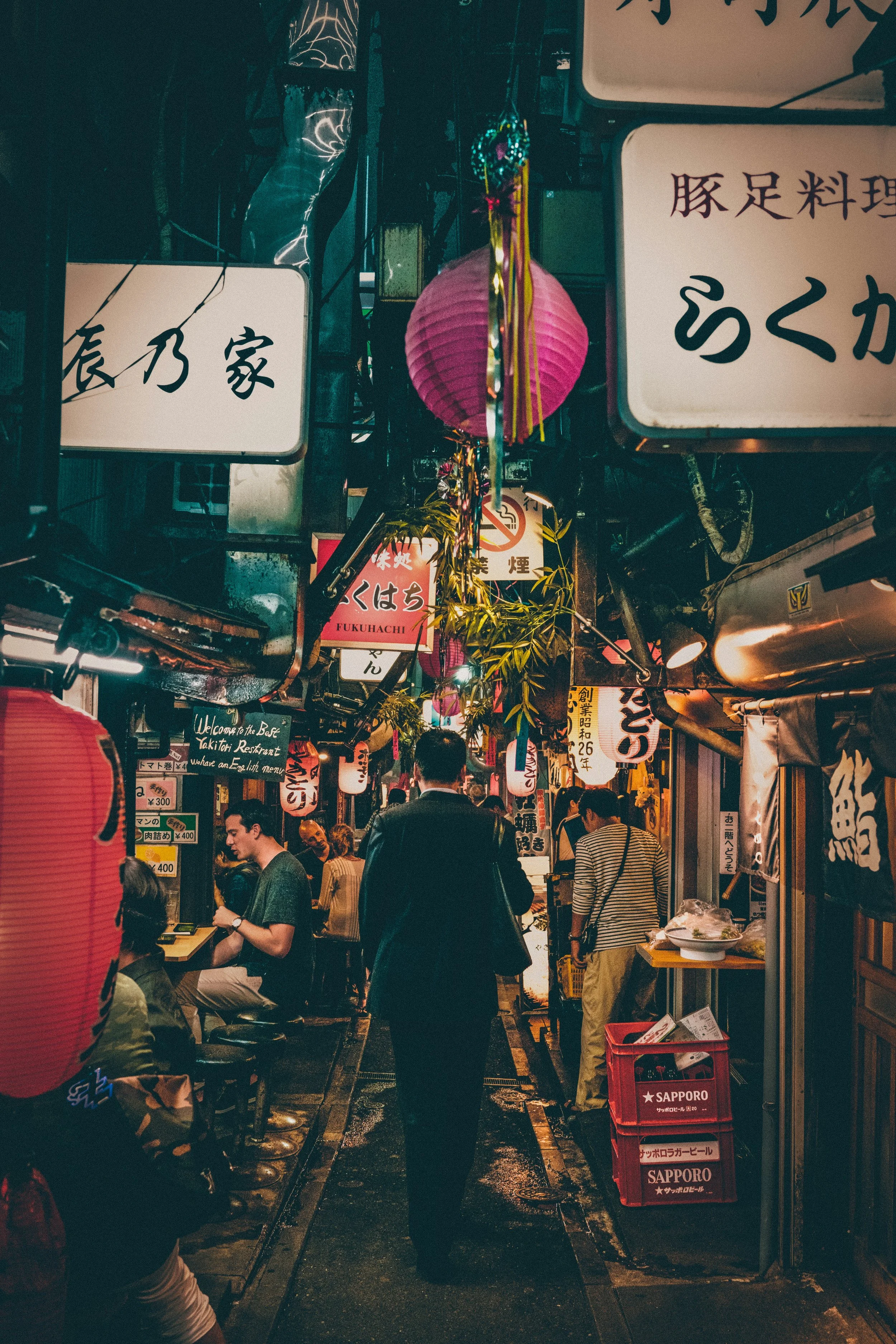
Having a guide for an evening like this is worth more than it might first seem. A great deal of Tokyo's best food — the counter-only izakaya, the ramen shop with a ticket machine and no English on the wall, the seven-seat restaurant that only takes reservations by phone — is effectively invisible to a visitor on their own, however good their research. A guide secures the table in the first place, translates the menu (and explains what things actually are, not just what they are called), handles ordering etiquette, and adds the context that turns a meal into a cultural experience — why a dish is seasonal, what a regional specialty means, how to eat something that arrives with no obvious instructions. For a family with young or unfamiliar palates, dietary needs and preferences can be flagged and worked around in advance rather than discovered mid-meal.
This evening is built around two very different but complementary food experiences: one proper sit-down meal, followed by a more casual, local finish. The guide collects the family from the hotel and takes them by public transport to a reserved restaurant for a seven-course dinner with drinks — the kind of chef-led meal that is hard to book or navigate without a Japanese-speaking companion, especially somewhere without an English menu or walk-ins. From there, the guide leads you on foot to a local ramen shop for a final, casual course, then walks everyone back to the hotel around 21:00.
Departure: The Gate Hotel to Narita Airport
- Meeting point
- The Gate Hotel Tokyo by Hulic lobby, recommended pickup 06:30–07:00.
- Transfer
- Private vehicle direct to Narita Airport, Terminal 3 — roughly 75–90 minutes depending on traffic.
- Service
- Private transfer, Toyota Hiace, English-speaking driver.
A mirror of the arrival transfer: the driver collects the family from the hotel lobby and drives straight to the departure terminal. Flight confirmed as GK107 (Jetstar Japan) to Sapporo New Chitose, departing Narita Terminal 3 at 09:30.
Check-in for domestic flights closes 30 minutes before departure, but with five passengers and luggage it is worth building in a real buffer — arriving by around 08:00 is a sensible target, which points to a hotel pickup between 06:30 and 07:00.
Kiroro Peak
Kyoto
Capella Kyoto, Miyagawacho13 to 16 January
Arrival: Itami Airport to Kyoto
- Meeting point
- Itami Airport (Osaka) arrivals hall, off ANA flight NH984 from Sapporo New Chitose, landing 15:45.
- Transfer
- Private vehicle, roughly 60–75 minutes from Itami to Capella Kyoto in Higashiyama/Gion, depending on traffic.
- Service
- Private transfer, Toyota Hiace, English-speaking driver.
Same format as the Tokyo transfers: the driver waits in the arrivals hall at Itami after the 15:45 landing and takes the family directly to Capella Kyoto, with no local trains or taxis to manage after a flight. Capella Kyoto sits in Miyagawacho, right beside Kennin-ji Temple in the heart of Gion and Higashiyama.
Arashiyama
- Meeting point
- Capella Kyoto lobby, 09:00.
- Transfer
- Local transit to a convenient station (around 15–20 minutes), then the JR Sagano Line to Arashiyama, roughly 20–25 minutes each way.
- Service
- Half-day guided tour, English-speaking guide, public transport and entrance fees included. Runs roughly 09:00 to 13:30, leaving the afternoon free.
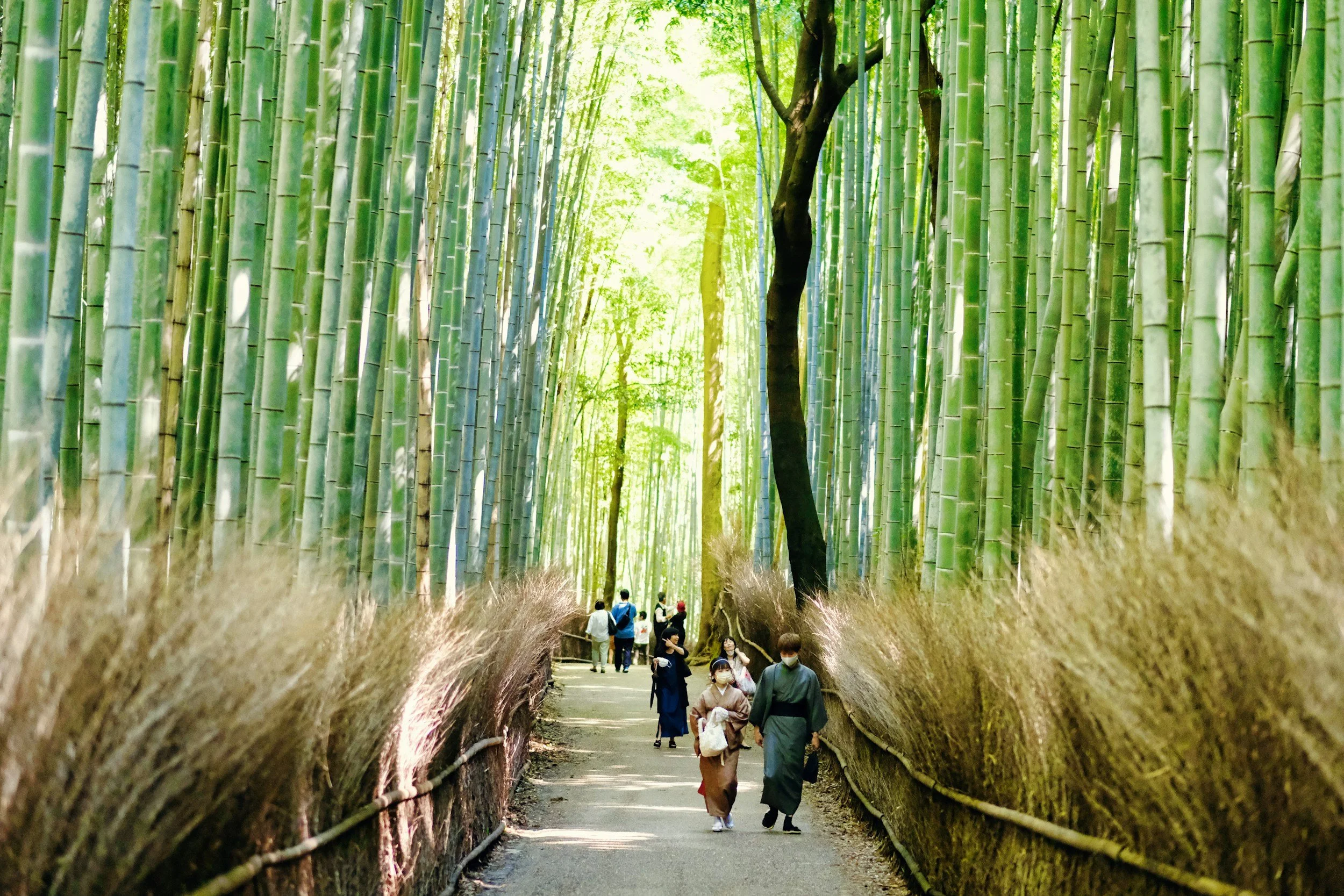
Arashiyama, on Kyoto's western edge, packs an unusual amount of scenery into a small area. The Bamboo Grove is the headline — a path through towering bamboo so dense it filters the light green, tall enough to sway and creak overhead in the wind. It is genuinely atmospheric, though busy by mid-morning, so an early visit helps. From there, Togetsukyo Bridge ("Moon Crossing Bridge") spans the Katsura River with the forested hills of Arashiyama behind — one of Kyoto's most photographed views, especially from the riverbank.
At the south end of the bridge is Iwatayama Monkey Park, home to around 120 wild Japanese macaques roaming freely over a hillside. It is a short, fairly steep 20-minute walk to the summit, rewarded with sweeping views over Kyoto and up-close (but safely managed — feeding is only allowed from inside a covered hut) encounters along the way.
The tour returns by JR train, arriving back at Capella Kyoto around 13:30, with the rest of the afternoon free.
Fushimi Inari and Gion
- Meeting point
- Capella Kyoto lobby, 09:00.
- Transfer
- Public transport, arranged and led by the guide throughout the day.
- Service
- Full-day guided tour, English-speaking guide, public transport and entrance fees included. Runs roughly 09:00 to 17:00.
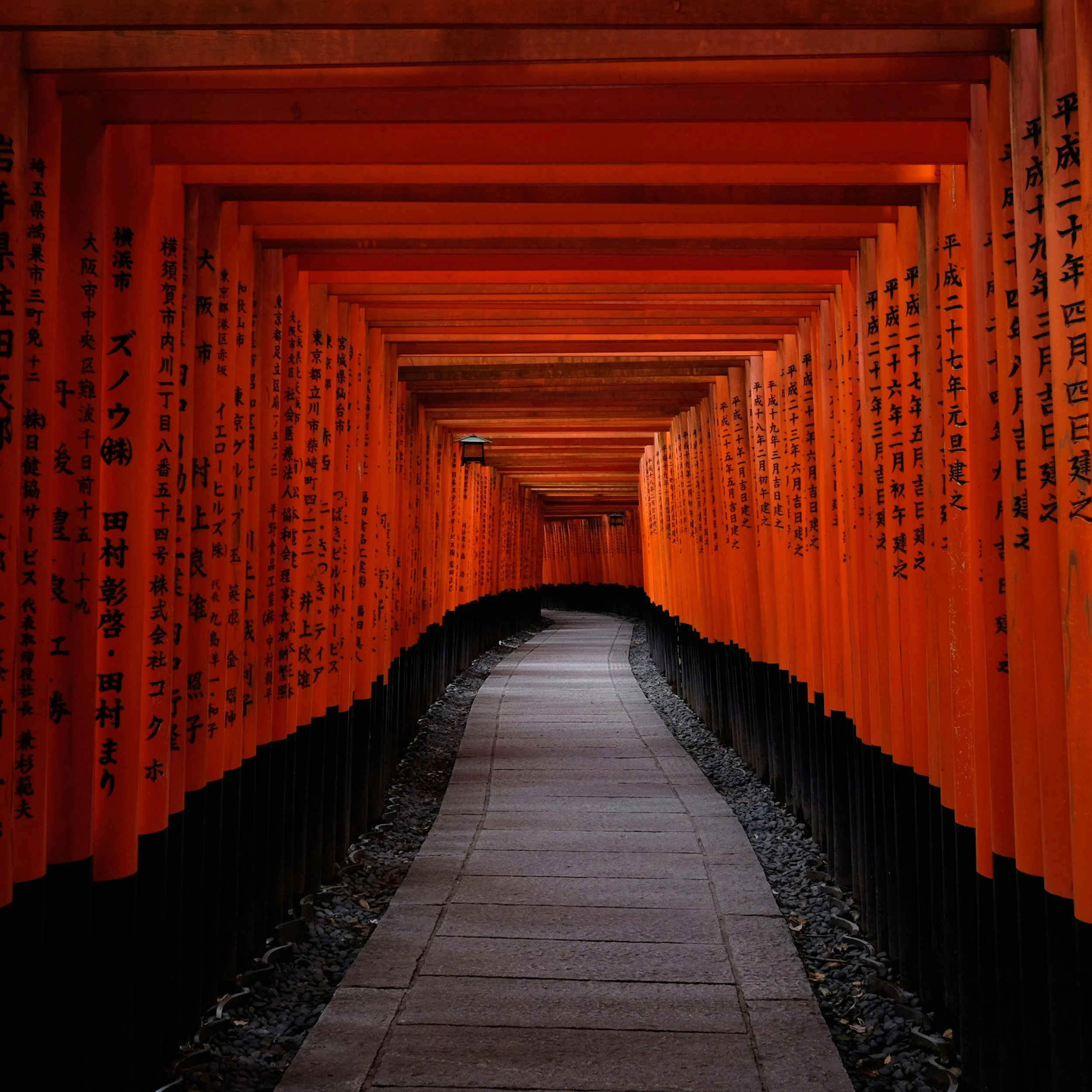
The day opens with Fushimi Inari Shrine, probably Kyoto's most photographed site: thousands of vermilion torii gates form a tunnel climbing Mount Inari, donated over centuries by individuals and businesses as offerings to Inari, the Shinto deity of rice, sake and prosperity. Foxes, Inari's messengers, appear as statues throughout the grounds. The full loop to the summit and back takes two to three hours, but even a shorter walk through the first sections delivers the iconic view, so the guide can tailor how far the family goes.
From there the tour moves to Nishiki Market, a narrow covered street known as "Kyoto's Kitchen" — five blocks of stalls selling pickles, fresh seafood, wagashi (traditional sweets), knives, tea and countless things to sample along the way. A good way to graze through lunch.
The afternoon covers Gion, Kyoto's geisha (geiko and maiko) district: Hanamikoji Street and the Shirakawa canal area are lined with beautifully preserved wooden machiya townhouses and traditional teahouses, and offer the best (though never guaranteed) chance of glimpsing a geiko or maiko on her way to an appointment. The tour also takes in Kennin-ji, Kyoto's oldest Zen temple, known for its dry rock garden and dramatic ceiling painting of twin dragons, and finishes at Yasaka Shrine and neighbouring Maruyama Park — Yasaka is the guardian shrine of Gion, brightly painted and lively year-round, while Maruyama, Kyoto's oldest public park, is a quieter place to wind down.
Capella Kyoto sits right beside Kennin-ji, so much of today finishes on the hotel's doorstep. By the end of the day the neighbourhood will feel familiar, which makes it easy to return on your own.
Departure: Kansai Airport
- Meeting point
- Capella Kyoto lobby, pickup time to be confirmed against the outbound flight.
- Transfer
- Private vehicle direct to Kansai International Airport, roughly 80–100 minutes depending on traffic.
- Service
- Private transfer, Toyota Hiace, English-speaking driver.